India is known around the world for its wide variety of spices. From the warm aroma of cumin to the beautiful golden colour of turmeric, Indian spices bring flavour, tradition, and happiness to millions of kitchens.
But have you ever wondered how these spices travel from Indian farms to international markets?
Spice export from India is the process of supplying Indian spices to buyers in other countries. It involves selecting the right products, checking quality, preparing export documents, and arranging international shipping.
For beginners and international buyers, understanding this process is important for making safe and confident purchasing decisions.
At Prayosha Meera Spices, we believe that good business relationships begin with trust, quality, and clear communication.
This beginner-friendly guide explains how the spice export process works, what international buyers should know, and how to source Indian spices for wholesale businesses.
What Is Spice Export from India?
Spice export from India means selling and shipping Indian spices to businesses and customers in other countries.
Indian spice exporters supply products such as cumin, coriander, turmeric, red chilli, fennel, and many other spices to international markets.
These spices can be exported in different forms, including:
- Whole spices
- Ground spice powders
- Blended spice mixes
- Bulk spices for food manufacturers
For example, a food distributor in the United Kingdom may purchase cumin powder from an Indian supplier and sell it to local restaurants, supermarkets, and food businesses.
The international spice trade connects Indian farmers, spice manufacturers, exporters, and overseas buyers.
Why Do International Buyers Source Spices from India?
India has a long history of spice cultivation, processing, and international trade.
Different regions of India produce spices with unique flavours, aromas, and characteristics. This gives international buyers access to a wide selection of products.
1. Wide Variety of Spices
India produces many spices used in traditional cooking, packaged foods, restaurants, and seasoning blends.
2. Established Processing Industry
Indian spice manufacturers offer services such as cleaning, grinding, blending, quality checking, and packaging.
3. Bulk Sourcing Opportunities
International wholesalers and food businesses can discuss bulk purchasing options based on product specifications and required quantities.
4. Different Packaging Options
Depending on the supplier, spices may be available in retail packs, food-service packs, or larger bulk packaging.
However, don’t choose a supplier based on price alone. Consistent quality, food safety, proper documentation, and clear communication matter just as much.
Popular Indian Spices for International Markets
India offers a wide range of spices for different food industries and consumer preferences.
Here are some popular products that international buyers commonly consider.
Cumin Powder
Cumin has a warm, earthy flavour and strong aroma. It is commonly used in curries, soups, sauces, spice mixes, and packaged food products.
Coriander Powder
Coriander offers a mild flavour with slightly citrus-like notes. It is widely used in Indian cooking, seasoning blends, and processed foods.
Turmeric Powder
Turmeric is recognised for its natural golden-yellow colour and earthy taste. It is commonly used in curries, sauces, spice blends, and other food preparations.
Red Chilli Powder
Red chilli powder adds heat, colour, and flavour to food. International buyers can choose different chilli varieties based on their required heat level and colour.
Fennel Powder
Fennel has a naturally sweet aroma and distinctive flavour. It is used in cooking, traditional recipes, and various spice mixtures.
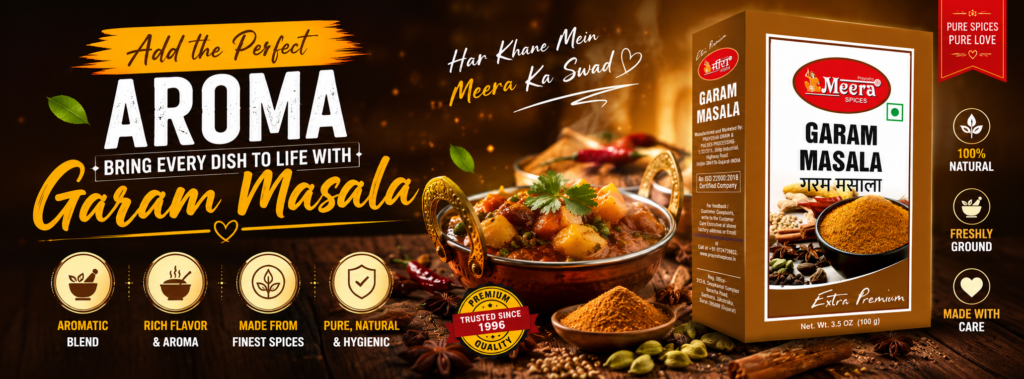
Prayosha Meera Spices offers a selection of ground and blended spices. Buyers can explore our range of spices to understand the available products.
How to Export Spices from India Step by Step
Understanding how to export spices from India step by step helps both exporters and international buyers prepare for a successful transaction.
The spice export process generally includes six important stages.
Step 1: Select the Spices You Need
The first step is choosing the spices suitable for your business.
International buyers should clearly mention the product name, required quantity, product form, and destination country.
For example, a wholesale buyer may require 500 kg of cumin powder in bulk packaging.
Providing clear requirements helps suppliers prepare accurate quotations.
Step 2: Check Product Quality and Specifications
Quality is one of the most important parts of spice sourcing.
Before purchasing, buyers should discuss product specifications such as moisture content, colour, aroma, purity, and packaging.
When available, request samples and relevant laboratory reports.
Step 3: Request a Quotation
Once product specifications are confirmed, request a detailed quotation from the supplier.
A quotation should explain the product price, quantity, packaging, payment conditions, and shipping terms.
International trade terms such as FOB and CIF help explain which transport costs and responsibilities belong to each party.
The first step is choosing the spices suitable for your business.
International buyers should clearly mention the product name, required quantity, product form, and destination country.
For example, a wholesale buyer may require 500 kg of cumin powder in bulk packaging.
Providing clear requirements helps suppliers prepare accurate quotations.
Step 4: Confirm Export Documents
The Indian exporter prepares the documents required for export clearance.
Meanwhile, the international buyer should verify import permissions, food safety rules, and customs requirements in the destination country.
Step 5: Arrange Packaging and Shipping
Proper packaging helps protect spices from moisture, contamination, and damage during transportation.
Depending on shipment size, delivery requirements, and cost, spices may be transported by sea or air.
Step 6: Complete Customs Clearance and Delivery
After completing the necessary export formalities, the shipment is dispatched.
The importer or appointed customs broker handles the required clearance procedures at the destination.
Good communication between the buyer, exporter, and logistics partners helps reduce delays.
What Documents Are Required for Spice Export from India?
Understanding the documents required for spice export from India is important for smooth international trade.
Indian exporters generally need the following registrations and shipment documents.
Important Export Registrations
- Importer Exporter Code (IEC): Issued through the Directorate General of Foreign Trade (DGFT), this code is required for most commercial import and export activities.
- Spices Board Registration (CRES): The Certificate of Registration as Exporter of Spices is required for exporting spices from India.
- FSSAI Licence: Food exporters must hold the applicable licence from the Food Safety and Standards Authority of India.
Common Shipping Documents
- Commercial invoice
- Packing list
- Shipping bill
- Bill of lading or air waybill
Additional documents, such as a certificate of origin, phytosanitary certificate, or laboratory test report, may be required depending on the spice and destination country.
Not every shipment requires the same documents. Exporters and buyers should always verify the applicable requirements before dispatch.
What Quality Standards Matter in Spice Export?
Check products, pack sizes, MOQ, pricing, freight, payment terms, delivery time, territory, documents, returns, damaged-goods terms, and distributor support.
Quality is essential when purchasing spices for international markets.
Buyers should consider both the product’s natural characteristics and its compliance with food safety requirements.
Important quality checks may include:
- Moisture content
- Product purity
- Microbial contamination
- Pesticide residues
- Aflatoxins and other contaminants
- Packaging quality
Different countries may have different import requirements.
For example, spices imported into the United States must meet applicable food safety requirements set by the FDA.
Before confirming a bulk order, international buyers should discuss required testing, specifications, and available quality documents with their suppliers.
You can also learn about our spice manufacturing infrastructure and the processing approach described by Prayosha Meera Spices.
How to Find Reliable Spice Exporters in India
Finding a reliable supplier is one of the most important steps in international spice sourcing.
A good business relationship should begin with transparency and a clear understanding of expectations.
Before choosing a spice supplier, consider the following questions:
- Does the supplier provide clear product specifications?
- Can the supplier share samples or available quality reports?
- Are the required business registrations and documents available?
- Can the supplier meet your quantity and packaging requirements?
- Are payment terms, delivery responsibilities, and timelines clearly explained?
You should also understand how the supplier handles product quality concerns and communication after an order is placed.
Learning about a company’s background can help build confidence. Read more about Prayosha Meera Spices and its approach to spice manufacturing.
How to Source Wholesale Indian Spices with Prayosha Meera Spices
Sourcing wholesale Indian spices becomes easier when buyers provide clear information about their business requirements.
Prayosha Meera Spices is an India-based spice brand offering ground spices and blended spice products.
The company also provides commercial purchasing options for food businesses.
If you are an international importer, wholesaler, distributor, or food business, you can begin by sharing your requirements and discussing product availability and possible export arrangements.
Useful details to include in your enquiry are:
- Required spice and product form
- Estimated order quantity
- Destination country
- Preferred packaging
- Quality specifications
- Expected delivery schedule
You can explore our commercial spice ordering options and discuss your purchasing needs with the team.
Every successful sourcing relationship starts with understanding what the buyer needs.
Frequently Asked Questions About Spice Export from India
1. Can beginners import spices from India?
Yes. Beginners can import spices from India after understanding the relevant import regulations, selecting suitable products, and finding an appropriate supplier. Checking documentation, product quality, and shipping costs before ordering is important.
2. Which Indian spices are commonly exported?
India exports many spices, including cumin, coriander, turmeric, red chilli, fennel, pepper, and cardamom. Product demand varies according to the destination country and local food industry.
3. Is laboratory testing necessary for spice export?
Laboratory testing may be required depending on the product, destination market, and applicable regulations. Buyers should discuss moisture, pesticide residues, microbial safety, and other relevant quality requirements with their suppliers.
4. Can international buyers purchase Indian spices in bulk?
Yes. Many Indian spice manufacturers and exporters supply products for wholesale and commercial use. Minimum order quantities, packaging options, and prices vary between suppliers.
5. How can I contact an Indian spice supplier for wholesale orders?
Start by sharing your required product, quantity, destination, packaging needs, and quality specifications. You can contact Prayosha Meera Spices through its website to enquire about products and suitable commercial sourcing arrangements.
Conclusion: Start Your Spice Sourcing Journey with Confidence
Spice export from India offers international businesses opportunities to source a wide variety of Indian spices. However, successful importing requires more than finding the right product. Understanding quality standards, checking documents, discussing packaging, and planning international shipping are all important steps. For beginners, the best approach is to start with clear requirements, ask useful questions, and work towards building a dependable relationship with a suitable supplier.
At Prayosha Meera Spices, we believe that quality, trust, and communication are the foundation of lasting business relationships. Whether you are exploring Indian spices for the first time or planning your next wholesale purchase, we welcome the opportunity to understand your requirements.
Looking for Indian spices for your business?
Contact Prayosha Meera Spices to share your requirements, ask questions, and explore available sourcing opportunities.

Mr. Brijesh Akoliya
Brijesh Akoliya is an entrepreneur, spice industry professional, and passionate blogger. As the founder of a spices company, he shares insights on spices, food, business, and industry trends, combining his entrepreneurial experience with a passion for quality, authenticity, and innovation.