Choosing a spice brand is not only about getting a low buying price. You are choosing products, a supplier, and a business relationship. At Prayosha Meera Spices, we recommend comparing quality, demand, order terms, packaging, supply, and communication before making a decision.
This guide explains how to choose a spice brand for distribution in a simple, practical way.
Why Choosing the Right Spice Brand Matters for Distributors
A distributor buys stock before selling it onward. A poor choice can leave money tied up in slow-moving products or cause problems when stock is unavailable.
The right brand should fit your local market and business capacity. Price matters, but price alone should not decide the partnership.
What to Look for in a Spice Brand for Distribution
Product quality and batch consistency
Start with the product. Ask for samples and compare taste, aroma, colour, grind, and pack condition. Ask how the company checks quality across different batches.
For larger orders, you can also ask for product specifications or relevant test reports. India’s Spices Board operates quality evaluation laboratories for spice testing.
Product range and market demand
A large catalogue is useful only when the products fit your market. Check which ground spices, blended masalas, whole spices, and pack sizes local retailers need.
Start with products that have clear demand. Expand after you see which products sell faster.
Price, margin, MOQ, and payment terms
Ask for the full commercial spice requirements picture. This includes wholesale price, minimum order quantity (MOQ), taxes, freight, payment terms, and any distributor schemes.
MOQ is the smallest order a supplier will accept. A high MOQ can increase inventory and working-capital needs. A low price may still be a poor deal if freight is high or products move slowly.
Packaging, shelf life, and labels
Check pack sizes, sealing, batch details, spice manufacturing process or packing information, best-before information, and other required declarations.
For India, food businesses must follow applicable FSSAI rules. FSSAI’s Labelling and Display Regulations cover packaged-food labels. Ask for current documents instead of relying only on logos or sales claims.
Supply and delivery reliability
Ask about normal lead times, order process, stock availability, and supply during busy periods.
Also ask how shortages, damaged packs, or delayed deliveries are handled. Reliable supply helps you serve retailers without repeated stock gaps.
Support and business terms
Ask who will handle your account and how orders are placed. Understand any product support, retailer support, territory terms, returns, and payment conditions.
Get important terms in writing. Clear communication matters before and after the first order.
How to Evaluate a Spice Manufacturer Before Taking Distributorship
Use the same checklist for every brand.
Factor | What to Check | Why It Matters |
Quality | Samples, consistency, testing | Helps judge repeat quality |
Demand | Products and pack sizes | Helps stock movement |
MOQ | Starting and repeat quantity | Affects inventory and working capital |
Packaging | Seal, label, shelf life | Important for retail sale |
Supply | Lead time and stock | Helps reduce shortages |
Terms | Price, freight, payment, territory | Shows the real deal |
Before taking a spice distributorship, check the food-business details that apply to your purchase. FSSAI states that food businesses in India require licensing or registration under the food-safety framework. Its FoSCoS system is used for food-business licensing and compliance.
A small trial order can also help you test product acceptance, packing, ordering, and delivery before committing more money.
Questions to Ask Before Choosing a Spice Distribution Partner
Ask clear questions before you become a spice distributor:
- Which products and pack sizes are available?
- What are the opening and repeat-order requirements?
- What is the normal delivery time?
- Which current food-safety or business documents can you share?
- What are the payment, freight, return, and damage terms?
- Is any territory arrangement offered?
- What support is available to distributors?
Compare the answers in writing. This can reveal unclear conditions before you place a larger order.
Common Mistakes to Avoid When Choosing a Spice Brand
Do not choose only because the price is lower. Also avoid ordering too much stock before checking local demand.
Other mistakes include ignoring shelf life, accepting unclear payment terms, skipping product samples, and assuming every certification logo is enough proof. Ask for current documents and check whether they apply to the products you plan to distribute. Official FSSAI systems allow food-business licensing and registration information to be checked rather than relying only on marketing material.
How Prayosha Meera Spices Can Support Your Distribution Requirements
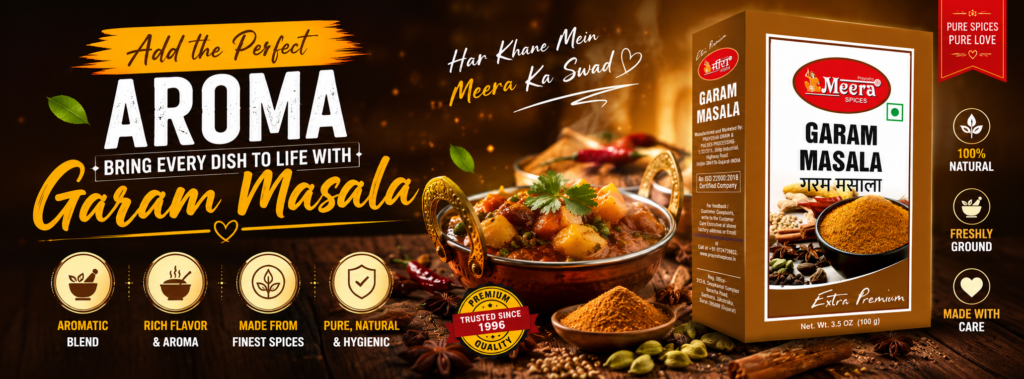
At Prayosha Meera Spices, our website lists ground, blended, and whole spice categories. We also describe a process that includes receiving raw spices, cleaning, grinding, blending, quality inspection, packaging, storage, and dispatch.
We believe distributors should understand the product, quantity, packaging, supply process, and business terms before starting a partnership. If you are comparing spice brands, you can explore our product range and discuss your distribution requirements with our team. Our website also provides dedicated commercial-order and partnership enquiry pages for business discussions.
Check products, pack sizes, MOQ, pricing, freight, payment terms, delivery time, territory, documents, returns, damaged-goods terms, and distributor support.
FAQs
How do I choose a spice brand for distribution?
Compare quality, demand, MOQ, total cost, packaging, shelf life, supply reliability, documents, and business terms. Do not decide on price alone.
How can I find a reliable spice supplier for distribution?
Shortlist suppliers, request samples, check documents, review order terms, and test communication. A trial order can help before a larger commitment.
Why is batch consistency important?
Retailers and customers expect a similar product each time. Large changes in taste, aroma, colour, or grind can make repeat selling harder.
Should I choose the spice brand with the highest margin?
Not automatically. Margin can vary by product, territory, freight, order size, and agreement. Also consider demand, stock movement, supply, and payment terms.
What should I check before taking masala distributorship?
Check products, pack sizes, MOQ, pricing, freight, payment terms, delivery time, territory, documents, returns, damaged-goods terms, and distributor support.
Conclusion
Choose the right spice brand for distribution based on facts, not promises. Compare brands carefully and protect your working capital. You can also explore Prayosha Meera Spices and speak with our team about product, quantity, packaging, supply, and distribution needs.

Mr. Brijesh Akoliya
Brijesh Akoliya is an entrepreneur, spice industry professional, and passionate blogger. As the founder of a spices company, he shares insights on spices, food, business, and industry trends, combining his entrepreneurial experience with a passion for quality, authenticity, and innovation.